


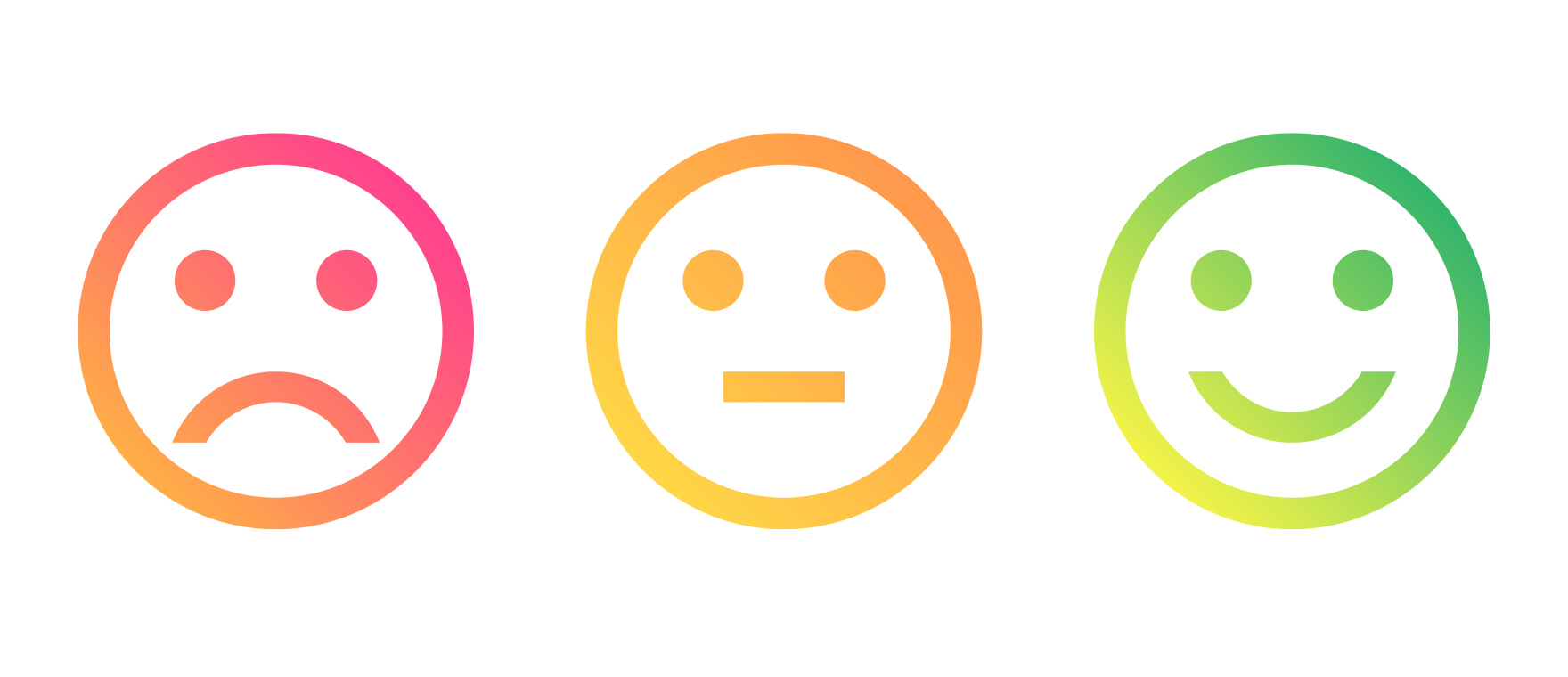
What Exactly Is Sentiment in Regards to Your Online Presence?
Sentiment is the opinion or attitude expressed in what people say about your company online. Are they praising you, expressing frustration, or simply sharing information without a clear positive or negative opinion? Basically, do they like you or not?
That feedback can appear in reviews, social posts, industry forums, blogs, and news coverage. Together, they give you a window into how your brand is being discussed.
You can count how often your company gets mentioned. But more attention doesn’t automatically mean more trust. What people say matters, too.
Sentiment analysis uses software to examine that language and estimate whether it expresses a positive, negative, or neutral opinion.
For your business, the value comes from understanding what’s behind those opinions and deciding what deserves attention.
How Sentiment Analysis Works
Many sentiment analysis tools use natural language processing, or NLP, and machine learning to evaluate written language.
The software examines wording and context, then assigns a sentiment label. Some systems evaluate individual sentences as well as the overall text and provide confidence scores for their classifications. Microsoft’s documentation explains how these labels and scores work.
For example, “Their team communicated clearly throughout the project” expresses a positive opinion. “We couldn’t get anyone to return our calls” expresses a negative one. “The company opened a new office” may simply be neutral information.
These labels help organize a large amount of text so your team can investigate patterns without reading every mention first.
Going Beyond Social Media
Sentiment analysis can be applied to text from reviews, forums, blogs, and online news alongside social media.
Within a listening platform, the information available depends on its sources and access. Brandwatch’s source documentation shows how collection coverage differs across websites and social networks.
That matters because your reputation extends beyond the comments on your own pages.
A prospective client may encounter a project discussion while researching your company. A potential employee may read about someone’s workplace experience before applying.
Those conversations can raise useful questions about how your company is being perceived as a business partner or employer.
One Mention Can Contain Several Opinions
People rarely write feedback to fit neatly into a dashboard.
Consider this hypothetical review: “The project team did excellent work, but getting the final paperwork took forever.”
The person is praising the work and criticizing the closeout process. One overall label could miss that distinction.
Some tools support aspect-based sentiment analysis, which links opinions to specific parts of an experience. Microsoft describes this approach as opinion mining.
For a construction company, that distinction could help separate feedback about workmanship from concerns about communication or administration.
Now the team has something specific to investigate.
Software Still Needs a Human Read
Sarcasm, industry language, and missing context can complicate what’s being analyzed.
“Wonderful, another unanswered email” isn’t typically positive. A negative statement in a news article might refer to an industry problem rather than your company.
Automated sentiment classifications are estimates. Brandwatch acknowledges accuracy limits and allows users to manually adjust sentiment labels.
Before acting on a questionable result, read the original text. Confirm what it refers to and whether the classification makes sense.
A red slice on a chart deserves investigation, but that doesn’t mean you and your team need to freak out.
What Brands Can Learn
Recurring praise can point to strengths worth investigating and communicating more clearly. Recurring complaints can reveal friction that marketing alone won’t fix.
Imagine a construction company reviewing available online discussions about its employment experience. Comments praise the crews and training but repeatedly express frustration about unexpected travel assignments.
The recruiting team could compare that feedback with questions candidates ask during interviews. If the concern appears in both places, clearer job descriptions and earlier conversations about travel may help. Operations may also need to examine how assignments are communicated to current employees.
The same approach applies to clients. If feedback repeatedly praises responsiveness, investigate whether that strength is reflected in your positioning. If it raises concerns about handoffs, bring the evidence to the team responsible.
The goal is to connect an observation to a practical next step.
Read the Numbers in Context
A negative percentage means little without knowing what it includes.
If two of ten mentions are negative, that’s 20%. It’s also a small sample. Repeated shares of one complaint can increase volume without representing many separate experiences.
The people posting online also aren’t necessarily representative of everyone you serve or employ.
When comparing periods, check that the sources, searches, and classification methods are reasonably consistent. Then look at the underlying themes and compare them with client feedback, recruiting conversations, and business results.
Treat sentiment as evidence to examine, not a complete verdict on your brand.
Turn What You Learn Into Action
At STUN, data informs creativity. Sentiment analysis can help clarify what people value, what they misunderstand, and where their experience needs attention. But we’ve found it isn’t a good fit for every business. Some industries simply don’t generate enough relevant online conversation to make it useful.
When it is a good fit, those findings can guide messaging, improve recruiting information, or highlight service issues. Put what you learn to work, then evaluate whether the changes help.
The goal is to give people a better experience and clearer reasons to trust your company. That matters more than making a chart greener.
Want to understand what online conversations can reveal about your brand? Give us a call.